This roadmap item was discussed during the latest Water Cooler. The overlap Onchain Treasury Allocation Improvements should be recognised, but potentially works alongside it as a short-term solution.
1. What is the problem to solve?
The current SPE model creates significant friction for smaller, community-driven engineering contributions:
Writing a full proposal requires a major time investment before any work begins
The onchain vote cycle adds weeks or months of delay for work that could start quickly
For scoped initiatives in the $2k–$20k range, the overhead-to-value ratio is simply too poor — community contributors won't run a full SPE process at that scale
This friction has become more acute as AI tools now allow contributors to build and test MVPs far faster than before
The result: genuinely useful, well-supported work doesn't happen — not because the community doesn't want it, but because there's no efficient path to fund it.
2. Why is solving this problem key to the Livepeer ecosystem?
Smaller experimental initiatives and quick engineering wins are often where early, high-signal progress happens. If the only funding path available requires months of process overhead, contributors either work for free, deprioritize the work, or move on entirely. Losing active contributors — and the compounding value of their momentum — is a real cost to the ecosystem. A more frictionless path to funding smaller initiatives would align disbursement with the natural cadence of community proposals and keep contributors engaged and productive.
3. What could success look like?
A delegated, standing funding pool for small-to-medium engineering initiatives, validated through the existing community roadmap process, where:
Contributors can apply for funding for quick wins and experiments without the full weight of a standalone SPE
Decisions are made transparently and without unnecessary bureaucracy
Funding speed matches the speed at which good ideas can now be executed
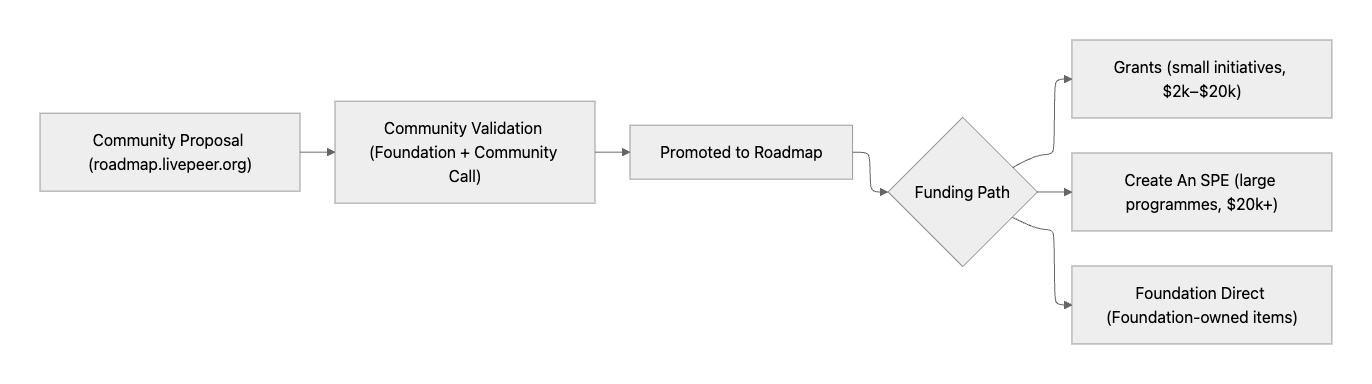
The above is just a potential solution and it is all open for discussion.
4. What are the outstanding questions to discuss?
Does this problem resonate — are there contributors who've shelved ideas because the SPE path felt too heavy?
What's the right pool size on a quarterly basis to be meaningful without being wasteful?
Should the funding mechanism be proactive, retroactive, or some mix depending on the type of initiative?
What governance structure makes sense — a multi-sig of trusted core contributors, or direct community votes on individual projects?
How does this fit into broader discussions on the onchain treasury, and is a short-term experiment worthwhile regardless?
Who should be eligible — public goods only, or should demand bets and other initiative types be in scope too?
Note: this has been elaborated and proposed by Rich O’Grady based on prior Water Cooler discussions, but does not represent a Foundation priority.
